
 |
An Overview of Indonesia
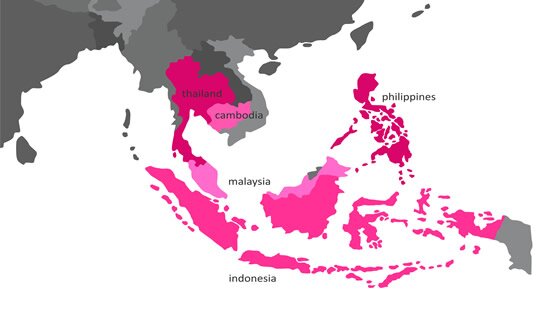
Indonesia is the world’s largest archipelago and is made up over 7,500 islands dotted over both sides of the equator. The name Indonesia derives from ‘indus’ which means India in Latin and ‘nesos’ the Greek word for island. Indonesia is wonderfully diverse with some 300 ethnic groups and an abundance of cultural variations that were developed over the centuries encompassing Indian, Arabic, Malay, Chinese and European influence.
The first Europeans in Indonesia were traders from Portugal who arrived in 1512 and were soon followed by the British and Dutch. In 1602 the Dutch became the main European power in Indonesia and their colonization spanned over 300 years. World War II ended the Dutch rule and independence was declared at the end of the war in 1945. Jakarta, the capital of Indonesia is located on the island of Java and is a major commercial and transportation hub. Just south of the city’s central Square (Merdeka Square) in Jalan Thamrin and Jenderal Sudir the international hotels, major financial institutions and multinational headquarters can be found.
.jpg)
Economy
The Indonesian economy is a member of the G20 global economies, giving it great respect from an investor’s point of view. Indonesia has a market based economy that is rich in natural resources including oil, natural gas, copper, tin, silver and gold. Agriculture and manufacturing see exports including rice, palm oil, tea, coffee, shoes, textiles, plywood, electronics and liquefied natural gas. Property demand in Indonesia is being driven by a growing middle class and increasing affluence of Indonesians and the country’s economy is growing rapidly with domestic consumption accounting for nearly 60% of the economy. GDP was 6.2% in 2012 and reports show that Indonesia has the the potential to become the world’s seventh-largest economy by 2030.
Jakarta (the country’s capital) and Bali (a world-class tourist destination island) are well known locations in Indonesia - Jakarta is the country's economic, cultural and political centre and is one of Asia’s most prominent metropolitan hubs. There has been substantial foreign investment into Bali already, and acceptance of the $USD as the currency of business between many establishments, anchors and protects the local economy from adverse fluctuations. In any case the Indonesian Rupiah has been stable for several years. Aside from tourism being a major source of revenue, Bali also has a robust export industry - volumes of furniture, clothing, artwork and jewelry are shipped worldwide every day.
.jpg)
Tourism
Tourism is also a major industry and Indonesia has many beautiful and unspoiled places to visit- Lombok and the Gili islands are simply stunning and the unique island of Bali is consistently voted one of the world’s top island destinations.
Tourists are attracted to Indonesia because it has so much to offer. Any holiday maker can get what they are looking for in Indonesia, from a city break in Jakarta to a beach and spa holiday in Bali. Indonesia’s tourists are invited to “Wonderful Indonesia”, this is a part of a campaign set up by the Culture and Tourism Minister in Indonesia.
The number of tourist arrivals In Indonesia in 2012 grew to 8.044 million an increase of 5.16% % from 2011 (7.65) showing just how strong tourism is in Indonesia and how much appeal the country has to overseas visitors. The top ten nationalities to visit Indonesia in 2010 were; Singaporeans, Malays, Australians, Chinese, Japanese, South Koreans, Americans, British French and Taiwanese making a true mix of people coming into the country.
Indonesia offers incredible nature tourism with its well preserved natural ecosystem, there are fabulous dive sites to visit as well as world-famous surf beaches and national parks. The volcanoes in Java are a great tourist attraction, particularly for keen hikers and campers. On top of these outdoor adventure style options, Indonesia has a magnitude of cultural tourism with its ancient temples and fascinating heritage.
Tourism in Bali continues to see fantastic growth with the first half of 2013 seeing tourist number to the island of 1,492,971 – 9% more compared to the same period in 2011.
.jpg)
Indonesia is truly stunning. Political stability and positive economic indicators of a growing economy make this archipelago a seriously exciting real estate investor location. Tabanan in Bali in particular is highlighted as an area for excellent gains.
Capital: Jakarta
Land size: 1,919,440 km2
Population: 251,160,124 (July 2013 est.)
Climate: Mostly equatorial, 2 seasons per year (rainy / dry) temperatures range from 16 to 35 degrees Celsius
Economics: GDP rate for 2012: 6.2%
Tenure for foreign property purchasers: Leasehold, nominee freehold
Availability of finance for foreign property purchasers: Vendor finance for select projects
.jpg)
|
|